Education and Protection
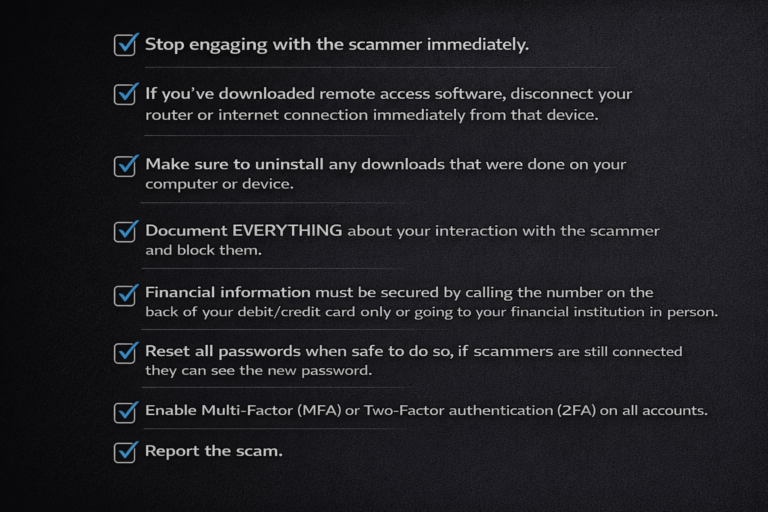
You’ve been scammed.
Now what?
10 Tips to Protect Yourself TODAY!
1. Urgent or scary messages are a red flag.
2. Do not click on links from strangers.
3. Never give anyone access of your computer or devices.
4. Never give codes that are texted or emailed to you. Those codes are security codes meant only for you.
5. Gift cards are only for gifts and not a method of payment.
6. Only use a company’s real app and website to communicate with them.
7. Do not search for support phone numbers online.
8. Legitimate companies will not message you through WhatsApp, Telegram or Signal.
9. Ask someone you trust for a second opinion.
10. Stop. Breathe. Think.
Is it possible that money or financial information was shared during this interaction?
Scammers use social engineering to trick you into giving up information you normally may not. You may not realize that your personal or financial information has been compromised. Many scammers will have you fill out forms, ask you to send your identification or log in to your bank or email.
Lets figure out which type of scam happened to you.
Types of Scams
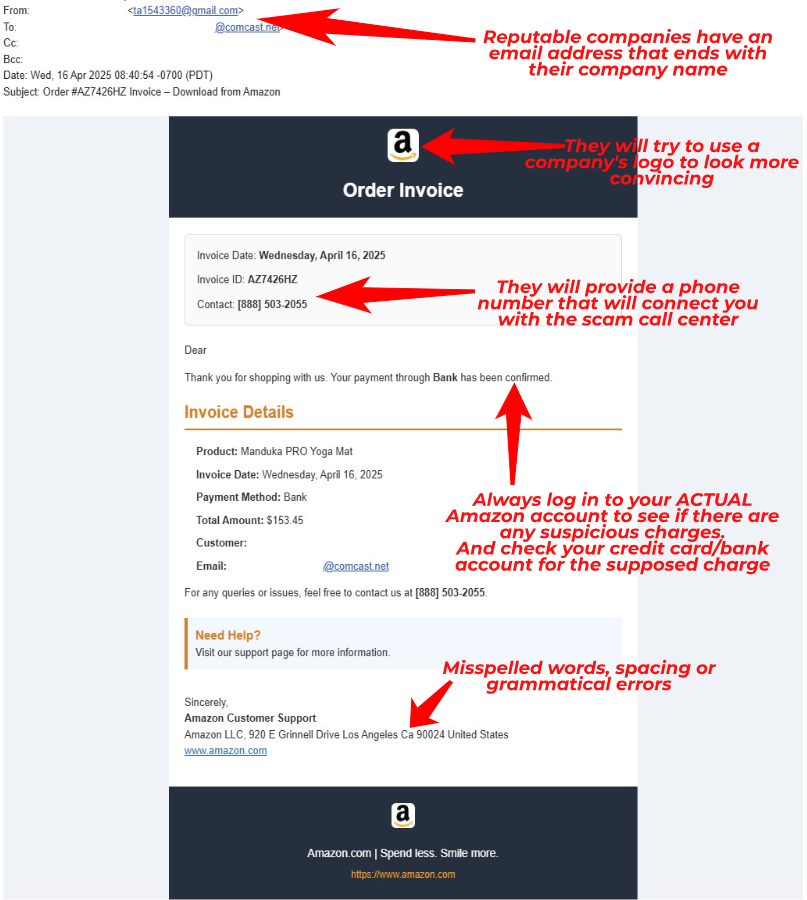
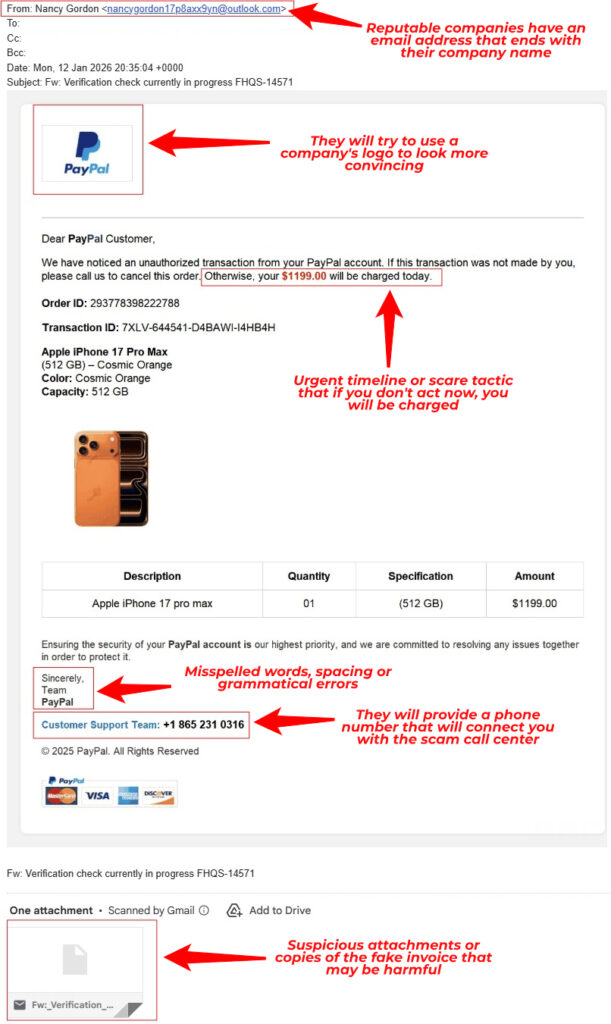
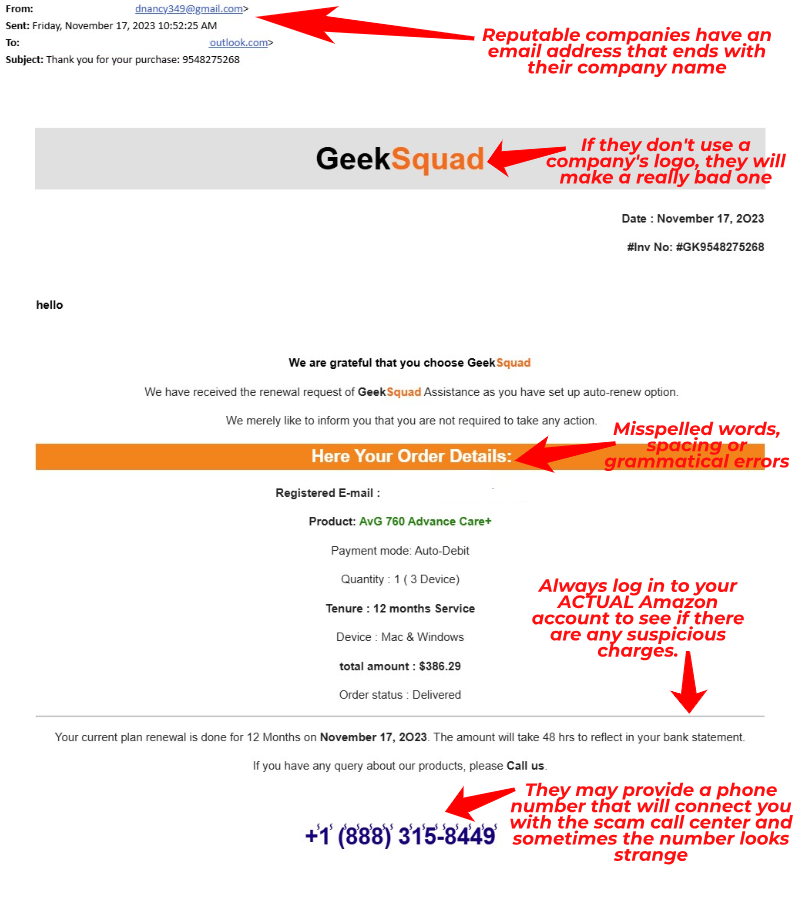
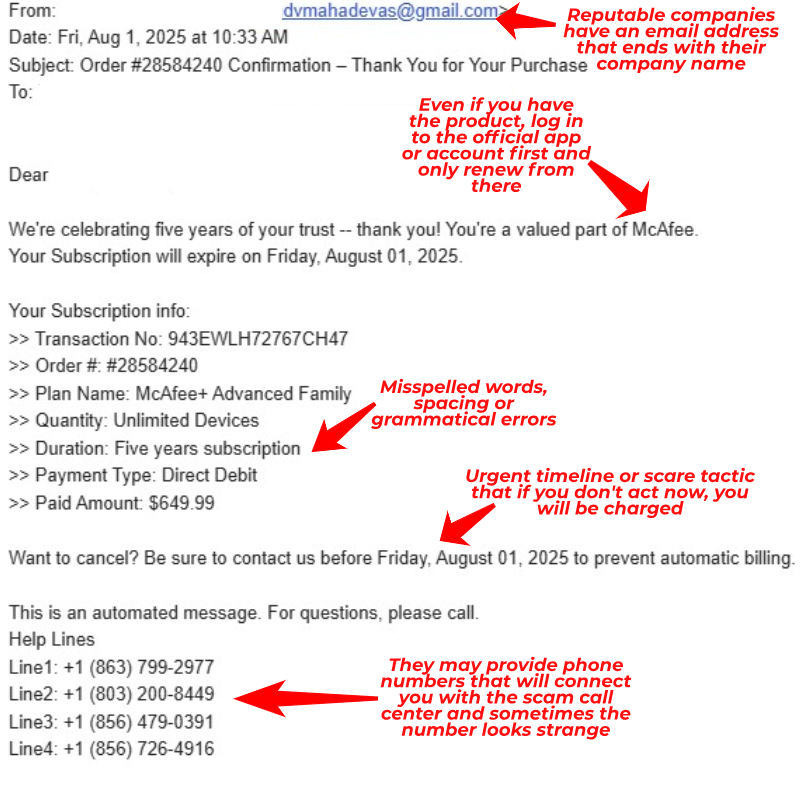
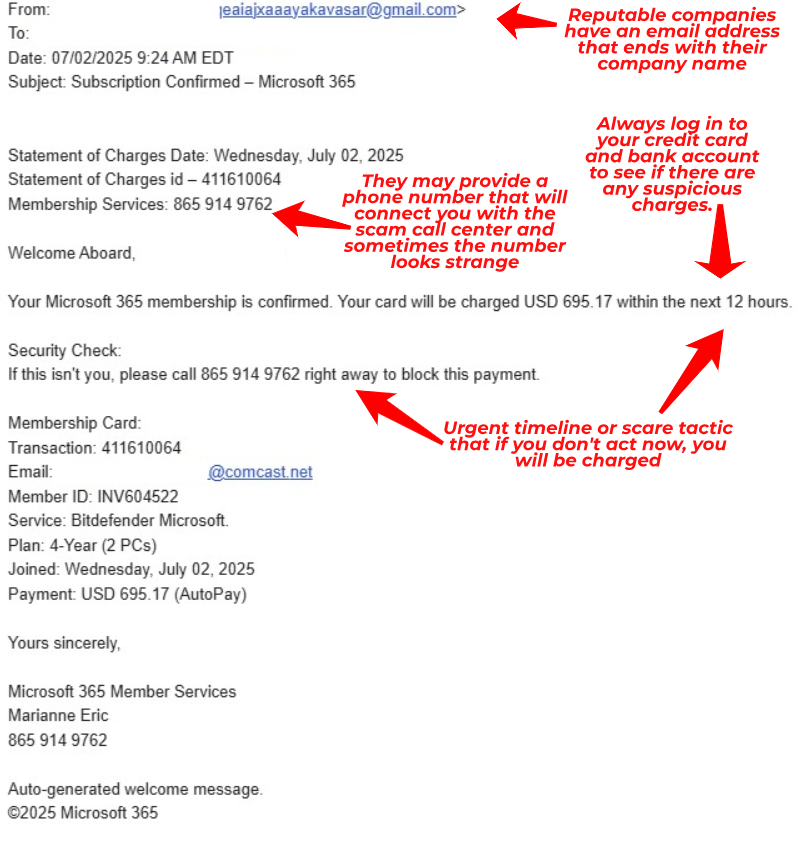
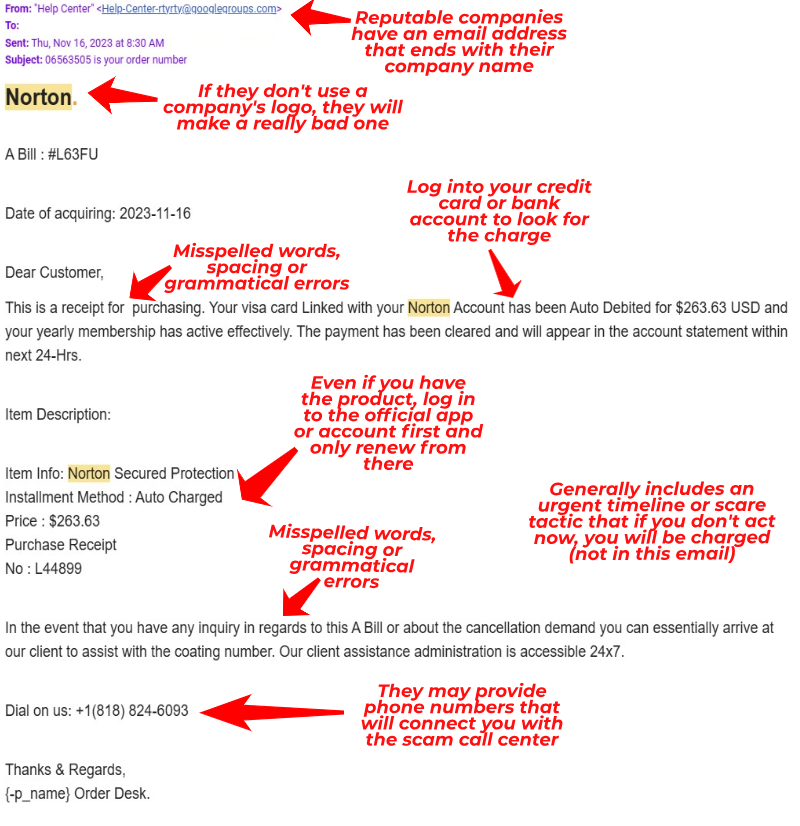
One of the most important things to remember about these scam emails, text messages, or images is that no matter how professional they look, your best bet is always to log into your account first to see if there are really any suspicious charges. You can usually dispute any unauthorized charges through the app or account itself. Most of these companies do not have a customer support number for you to call, and if they do, they will include that information directly on their official website or in the app itself. DO NOT ever call the numbers on these fake invoices because you will be connected to an overseas scam call center. They will trick you into downloading remote access software to your device or computer. Oftentimes, especially on a computer, these programs can be very difficult to remove. We recommend you disconnect your internet router to ensure that device is disconnected from the internet (including disconnecting Wi-Fi) until those remote access programs are removed. Once removed and secure, you can plug your router back in and turn your Wi-Fi back on. Take your computer in to a local computer repair shop to have it serviced if in doubt. Please also ensure that you have changed your banking and other personal accounts passwords immediately. Below is a list of several of these scam emails, please click on the one you’ve encountered and learn what to look out for so that this doesn’t happen again.
Scammers will usually have you fill out a fake refund form where they phish information out of you such as your name, address, phone number and what bank you bank with. They may use this for identity theft purposes. This is why it is crucial to change your passwords and contact your financial institution using only the phone number directly on the back of your credit/debit card. If you have lost money, be sure to file a police report and also an Internet Crime Complaint Center (ic3) report here: https://complaint.ic3.gov/
Tech support scams try to scare you into thinking something is wrong with your device or account. These scams often appear as pop-ups, or messages claiming there is a virus or security issue on your account, computer or device. Real companies do not use urgent warnings or cold calls to provide support. If you see a message like this, do not click, call, or download anything. Instead, disconnect your internet on that device, close the message and check your account directly through the company’s official app or website. Below are common tech support scams and what to watch for.
Lorem ipsum dolor sit amet, consectetur adipiscing elit. Ut elit tellus, luctus nec ullamcorper mattis, pulvinar dapibus leo.
If you’ve logged into your bank or given a scammer your credit card information, the first step you should take is call the number on the back of your debit/credit card. Do NOT Google search the number as scammers will often buy ads so that their fake customer service numbers show up first in the search. Most reputable financial institutions will not ask you to give them codes that have been texted to your phone or emailed to you. If you live near your financial institution, go directly to speak to someone there. Explain that scammers may have accessed your account and any transactions done were not done by you. It is also a wise decision to file a police report about any money lost and take the copy of the police report to file a dispute with your financial institution especially if they say they cannot help you.
Typically, money sent to scammers via gift cards, wire transfers and cryptocurrency (Bitcoin, Ethereum, etc.) is very difficult to recover. Keep receipts of the transactions and the wallet addresses to report to exchanges.
Money sent via credit card has the best chance of being recovered because you can request a chargeback against the vendor (often a shell company set up by scammers to appear legitimate).
If you have sent money via FedEx, UPS or through postal services, contact those companies immediately through the information provided on the receipts. Keep a detailed log of the transaction and provide tracking numbers, contents in the package besides money. Scammers may tell you to also pack magazines, books or clothing to disguise the money being in the package. Be sure to share the date, amount of money being sent and of course, the addresses of both the sender (you) and the recipient often a money mule, AirBnB, or another location specified by the scammer. There are no guarantees that your money will be recovered, but providing this information can increase the possibility of getting your money back.
Lorem ipsum dolor sit amet, consectetur adipiscing elit. Ut elit tellus, luctus nec ullamcorper mattis, pulvinar dapibus leo.
© 2026 DEYOCLUB. All rights reserved.